
5s
+1
Submission successful!

|
| Brand Name: | SUNHOUSE |
| Model Number: | WPC-08 |
| MOQ: | 200㎡ |
| Payment Terms: | T/T |
The surface finish is one of the most visible quality factors when purchasing WPC interior wall panels. Products from different suppliers may use similar wood grain patterns, but the decorative film, printing quality, adhesive performance, gloss level and production control can be very different.
For distributors, contractors and project buyers, surface evaluation should focus on finish type, color approval, film adhesion, scratch resistance, groove coverage, batch consistency and packaging protection. These factors determine whether the finished installation looks uniform and remains stable after delivery and installation.
WPC interior wall panels can be supplied with different decorative surface systems. Buyers should confirm the exact finish because the visual effect, production process and quality risks are not the same.
| Surface Finish | General Characteristics | Buyer Considerations |
|---|---|---|
| PVC Film Lamination | Decorative film is bonded to the WPC profile using adhesive and wrapping equipment | Check film adhesion, corner wrapping, groove coverage and resistance to peeling |
| Hot Stamping Or Heat Transfer | Decorative pattern is transferred to the prepared panel surface using heat and pressure | Check printing clarity, wear resistance and consistency across long panel lengths |
| Co-Extruded Surface | An additional surface layer is formed together with the WPC profile during extrusion | Confirm surface uniformity, color stability and compatibility with the core structure |
| Painted Or Coated Surface | A decorative or protective coating is applied after profile production | Check coating adhesion, curing, color control and resistance to visible marks |
| Solid Color Surface | Uses a uniform color rather than a printed wood grain pattern | Check batch color consistency because plain colors may show differences more clearly |
| Textured Surface | Includes embossed wood grain, brushed effects or other tactile patterns | Confirm texture depth, cleaning requirements and repeat consistency |
PVC film lamination and hot transfer are commonly discussed when buyers compare WPC fluted wall panels. Neither finish is automatically better for every project. The final result depends on material quality, production control and intended use.
Can provide a wide range of wood grains, stone patterns and solid colors. Buyers should pay close attention to film bonding around deep grooves, corners and locking edges.
Can create a printed decorative surface without wrapping a separate film over the complete profile. Buyers should evaluate pattern clarity and resistance to rubbing or surface wear.
May provide a more integrated surface layer, but color, texture and scratch performance still depend on the surface material and production process.
Can be suitable for customized solid colors, but buyers should confirm coating adhesion, curing quality and compatibility with the WPC substrate.
| Comparison Point | PVC Film Lamination | Hot Transfer Finish |
|---|---|---|
| Pattern Variety | Usually offers many decorative film options | Depends on available transfer patterns and production setup |
| Surface Texture | May provide matte, embossed, brushed or smooth finishes | Usually depends on the transferred pattern and prepared substrate |
| Main Risk Area | Film lifting, bubbling or weak adhesion around grooves and edges | Pattern wear, incomplete transfer or inconsistent printing |
| Color Matching | Controlled through approved film code and production batch | Controlled through transfer material and process settings |
| Inspection Focus | Adhesion, wrapping accuracy, film defects and glue marks | Pattern clarity, transfer completeness and surface resistance |
Decorative film quality affects appearance, processing performance and surface durability. A wood grain pattern may look attractive in a digital catalog but perform differently when wrapped over a deep fluted WPC profile.
Deep grooves, fluted surfaces, corners and locking edges are usually the most difficult areas for film lamination. Poor adhesion may not be obvious immediately after production but can develop into bubbling, lifting or peeling during storage and installation.
Check whether the film follows the complete groove without bridging, air pockets, wrinkles or excessive stretching.
Inspect for white stress marks, cracks, lifting and uneven wrapping where the film bends around the profile.
Confirm that the decorative film does not interfere with the tongue-and-groove connection or peel when adjacent panels are assembled.
Check whether cutting causes the film to separate from the WPC substrate or produce visible edge damage.
Buyers can carry out preliminary comparisons on samples, but informal checks should not be presented as substitutes for project-specific laboratory testing or an agreed inspection method.
Interior wall panels are not normally used as flooring or work surfaces, but they still need to withstand production handling, packing, transportation, cutting and installation without excessive visible damage.
| Inspection Item | What To Check | Possible Quality Risk |
|---|---|---|
| Light Rubbing | Check for color transfer, gloss change or visible marking | Weak printing or insufficiently cured surface treatment |
| Normal Handling | Move panels using the intended packaging and site procedures | Surface may scratch when panels rub against each other |
| Cutting | Inspect the decorative layer after sawing or trimming | Film may chip, split or lift at the cut edge |
| Installation Tools | Check contact areas around clamps, rulers and work surfaces | Soft surfaces may show pressure marks or scratches |
| Cleaning | Test a suitable cleaning method on a hidden area | Strong chemicals or abrasive tools may damage the finish |
Color variation can occur even when panels have the same product name or color code. The final appearance may be influenced by decorative film batches, printing conditions, WPC substrate color, lamination temperature, surface texture and viewing conditions.
| Possible Cause | How It Affects Appearance | Buyer Control Method |
|---|---|---|
| Different Film Batches | Wood grain tone, background color or contrast may vary | Request one film batch for the same project area where possible |
| Different Production Dates | Process conditions may create visible color or gloss differences | Record the production batch and keep same-batch replacement stock |
| WPC Core Color | The substrate may influence thin, light-colored or semi-opaque finishes | Confirm the complete finished panel rather than approving the film alone |
| Surface Texture | Embossed and smooth surfaces reflect light differently | Approve color and texture as one combined specification |
| Gloss Level | Two surfaces may appear different even when their printed colors are similar | Confirm matte, semi-matte or gloss expectations with physical samples |
| Lighting Conditions | Warm, cool and natural lighting can change perceived color | Evaluate the sample under the intended project lighting |
Digital photos, monitor images and printed catalogs are useful for preliminary selection, but they should not be used as the final color standard for bulk production.
Approve a full-width panel sample rather than a small film chip. The final sample should show the actual WPC substrate, groove depth, wrapping quality, pattern direction and surface reflection.
When the project includes multiple trims or profiles, approve the wall panel and matching accessories together because their colors may look different on different materials and surface shapes.
Wood grain direction affects the visual continuity of the completed wall. Panels packed or installed in different directions can appear mismatched even when the color is technically the same.
A small difference in gloss level can become highly visible when several panels are installed together, especially under spotlights, linear lighting or strong natural light.
Can create a softer and more natural appearance but may show polishing marks if panels are rubbed unevenly during cleaning or handling.
Reflects more light and may make scratches, uneven wrapping or surface waves more noticeable.
Adds tactile detail but the texture direction and depth should remain consistent between panels.
Can create a distinctive decorative effect but requires clear direction control during production and installation.
Surface defects should be classified before mass production so that the supplier and buyer understand which issues are unacceptable and which minor variations are permitted.
| Surface Defect | Possible Cause | Inspection Focus |
|---|---|---|
| Bubbles | Trapped air, poor bonding or unsuitable lamination conditions | Inspect flat surfaces, grooves and profile corners |
| Wrinkles | Uneven film feeding, pressure or temperature control | Check long panel sections and deep fluted areas |
| Film Lifting | Weak adhesive, contamination or insufficient surface preparation | Check edges, grooves and locking areas |
| White Stress Marks | Film overstretching around corners or deep profiles | Inspect under natural and angled lighting |
| Glue Marks | Excess adhesive or poor production cleaning | Check visible front surfaces and panel joints |
| Scratches | Handling, equipment contact or insufficient packaging protection | Inspect panels from different carton positions |
| Color Streaks | Printing, transfer or film production inconsistency | Compare the complete panel length |
| Uneven Gloss | Surface contamination or process variation | Inspect under side lighting and across connected panels |
Inspecting only the first panel from the first carton does not represent a complete bulk order. Samples should be selected from different production positions, cartons and pallets.
Starting trims, ending trims, internal corners and external corners may be produced from a different substrate or with a different surface process. As a result, the same color code may not look identical on every accessory.
A good surface finish can still arrive damaged if the packaging does not protect panels from rubbing, impact, moisture and movement during international transportation.
| Packaging Item | Purpose | Buyer Confirmation |
|---|---|---|
| Protective Surface Film | Reduces scratches and contamination during handling | Check removal method and whether adhesive residue remains |
| Interlayer Protection | Prevents decorative surfaces from rubbing against each other | Confirm foam, paper or film placement inside the package |
| Strong Carton Or Bundle | Controls movement and protects long panels | Review carton strength, panel quantity and handling method |
| End Protection | Reduces damage to panel corners and cut ends | Check both ends after unloading and before installation |
| Pallet Or Support | Helps maintain flat storage and forklift handling | Confirm whether the project requires pallets or reinforced supports |
| Color Labels | Identifies color, profile and production batch | Require clear labels on every carton or bundle |
Improper storage can create scratches, deformation, contamination or surface damage even when the panels leave the factory in good condition.
Cleaning instructions should be confirmed for the actual surface finish. A cleaning method suitable for one film or coating may damage another.
Use a soft cloth, soft brush or other non-abrasive method suitable for the fluted profile.
Test the approved cleaner on a hidden area before applying it across the visible wall.
Use suitable tools that can clean the fluted areas without scratching or lifting the decorative film.
Avoid strong solvents, abrasive powders or aggressive chemicals unless the surface supplier has confirmed compatibility.
| Problem | Possible Reason | Recommended Prevention |
|---|---|---|
| Film Peels From Grooves | Weak bonding, contaminated substrate or unsuitable wrapping conditions | Approve the complete profile and inspect deep groove adhesion before production |
| Panels Have Different Colors | Different film or production batches | Use one controlled batch for the same visible area |
| Surface Scratches During Delivery | Panels rub together or packaging is insufficient | Use protective film, interlayers and suitable carton support |
| Wood Grain Runs In Different Directions | Panels were packed or installed without orientation control | Add direction labels and inspect orientation before installation |
| White Marks Appear On Corners | Decorative film is overstretched around the profile | Evaluate film suitability and wrapping control for deep profiles |
| Trim Color Does Not Match | Accessories use another material or surface process | Approve panels and accessories as one complete system |
| Protective Film Leaves Residue | Unsuitable protective film or excessive storage conditions | Test removal and confirm storage and removal instructions |
There is no single best finish for every project. Buyers should compare appearance, adhesion, scratch resistance, maintenance, budget and production consistency.
Not automatically. PVC film can provide a wide range of textures and patterns, while hot transfer uses a different decorative process. Final quality depends on materials and production control.
Monitors, photography, printing, surface texture and lighting can change color perception. A physical sample should be used as the final approval standard.
Possible causes include weak adhesive, unsuitable film, poor surface preparation, trapped air or incorrect wrapping temperature and pressure.
They may show visible differences in color, grain or gloss. Same-batch panels are recommended for the same continuous wall area.
A small sample is useful for initial selection, but a full-width finished panel is better for checking grooves, wrapping, texture, pattern direction and final appearance.
Confirm protective film, panel interlayers, reinforced cartons, end protection, flat support and clear handling instructions before shipment.
Panels and trims should be approved together because different substrates and surface shapes can make the same color code appear different.
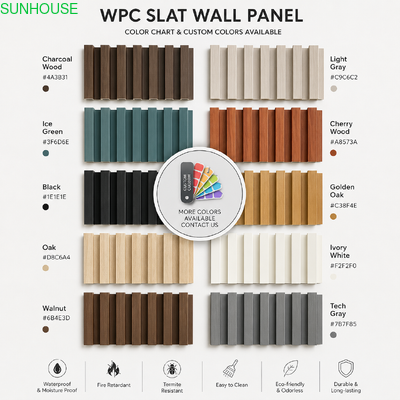
We supply WPC fluted interior wall panels with multiple wood grain colors, solid colors, decorative films, textures and matching installation accessories for distributors, wholesalers, contractors and commercial projects.
Send us your preferred panel profile, color reference, surface texture, gloss requirement, quantity and destination market for sample matching, finish recommendations and wholesale pricing.


 english
 français
 Deutsch
 Italiano
 Русский
 Español
 português
 Nederlandse
 ελληνικά
 日本語
日本語
 한국
한국
 العربية
 हिन्दी
 Türkçe
 indonesia
 tiếng Việt
 ไทย
ไทย
 বাংলা
বাংলা
 فارسی
فارسی
 polski
