
5s
+1
Submission successful!

|
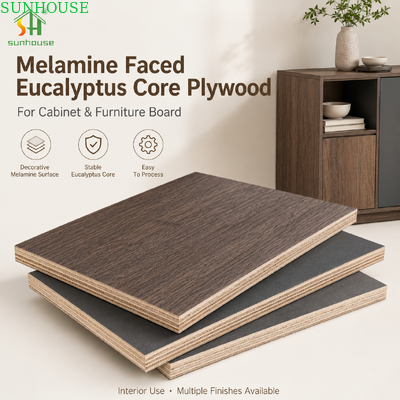
| Brand Name: | SUNHOUSE |
| Model Number: | ply-19 |
| MOQ: | 1000 |
| Payment Terms: | T/T |
Two melamine plywood panels may have the same 18mm thickness, 4x8 ft size and similar surface color — but their actual quality, processing performance and service life can be very different. For furniture manufacturers, cabinet makers and distributors, understanding what is inside the board is just as important as checking what it looks like outside.
When purchasing melamine faced plywood in bulk, comparing only thickness, dimensions and surface color is not enough. The final price can be affected by plywood core material, veneer quality, internal gaps, bonding quality, moisture content, melamine surface, thickness tolerance and manufacturing consistency.
A lower quotation may reduce the initial purchasing cost, but unstable plywood can create more problems during cutting, drilling, edge banding, cabinet assembly and final installation.
The better question is: “Which specification gives me the right balance of cost, processing performance and finished-product quality?”
Eucalyptus, poplar and mixed hardwood cores have different density, weight, screw holding performance and cost.
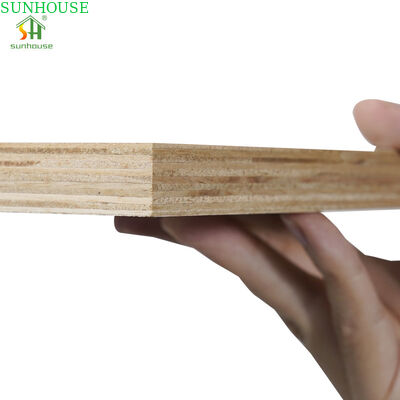
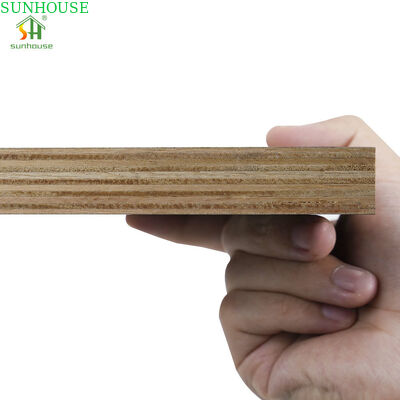
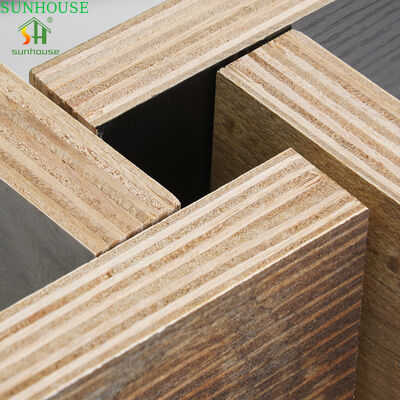
Excessive internal gaps can affect cutting quality, edge banding, screw fixing and structural consistency.
Proper adhesive application and hot pressing help reduce the risk of veneer separation, bubbling and delamination.
Surface paper, resin impregnation and pressing quality influence appearance, stain resistance and everyday surface durability.
Consistent board thickness makes CNC machining, cabinet assembly and edge banding easier to control.
Poor moisture control or unbalanced construction can increase the risk of warping during storage, processing or use.
The decorative melamine surface may look almost identical between two panels, while the internal plywood construction can be completely different. This is one of the main reasons why quotations vary between suppliers.
Internal gaps may not be visible when inspecting the decorative surface. However, once the board is cut, drilled, routed or edge banded, poor core construction becomes much easier to identify.
| Inspection Point | Better Controlled Board | Potential Low-Grade Risk |
|---|---|---|
| Core Structure | More uniform veneer arrangement | Large gaps or uneven overlap |
| Cut Edge | Cleaner and more consistent | Visible holes or broken areas |
| Edge Banding | Better support along the panel edge | Local depressions or weak areas |
| Screw Fixing | More predictable fixing performance | Screw may enter an internal void |
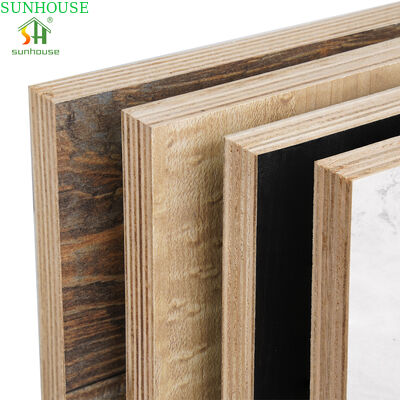
Buyers often select melamine plywood by color or wood grain, but commercial furniture production also requires consistency across the complete order.
Large cabinet or furniture projects require stable color between panels and production batches.
Matt, embossed, wood texture and other finishes should match the approved sample and project requirement.
Proper lamination helps create a flat, well-bonded decorative surface without obvious bubbles or local separation.
Furniture factories do not purchase melamine plywood simply to store full sheets. The boards will normally go through multiple processing steps. That is why machining performance should be evaluated before a bulk order.
For cabinet and furniture manufacturers, a sample cutting test can provide more useful information than inspecting the decorative face alone.
A quotation should be evaluated together with the complete specification. If two suppliers quote very different prices, buyers should confirm whether they are actually offering the same construction and quality level.
| Specification | What Buyers Should Confirm | Why It Matters |
|---|---|---|
| Core Species | Eucalyptus, poplar or mixed hardwood | Changes density, weight, performance and cost |
| Core Grade | Internal gaps, overlaps and veneer quality | Affects machining and structural consistency |
| Actual Thickness | Nominal thickness and allowable tolerance | Important for furniture assembly and edge banding |
| Adhesive System | Bonding requirement and intended application | Affects bonding and moisture performance |
| Melamine Finish | Color, texture, paper and approved sample | Affects appearance and surface consistency |
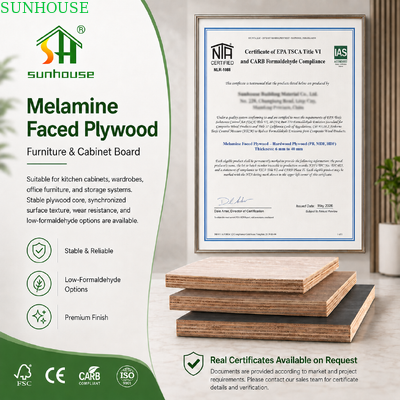
| Emission Requirement | Target market and requested standard | Important for import and project compliance |
There is no single melamine plywood specification that is ideal for every project. Core grade, surface finish, thickness and bonding requirements should be selected according to the customer's processing method, furniture design and target market.
A professional melamine plywood quotation should clearly define the board, rather than simply stating “18mm Melamine Plywood 1220 × 2440mm.”
Before comparing suppliers, confirm the core species, core grade, actual thickness, surface finish, bonding requirement, emission standard and processing expectations. Only then can you determine whether two quotations are truly comparable.
Send us your required thickness, panel size, core type, melamine color, surface finish, application and destination market. We can help match the board specification to your processing and project requirements.
Request Specification & Quotation

 english
 français
 Deutsch
 Italiano
 Русский
 Español
 português
 Nederlandse
 ελληνικά
 日本語
日本語
 한국
한국
 العربية
 हिन्दी
 Türkçe
 indonesia
 tiếng Việt
 ไทย
ไทย
 বাংলা
বাংলা
 فارسی
فارسی
 polski
