
5s
+1
Submission successful!

|
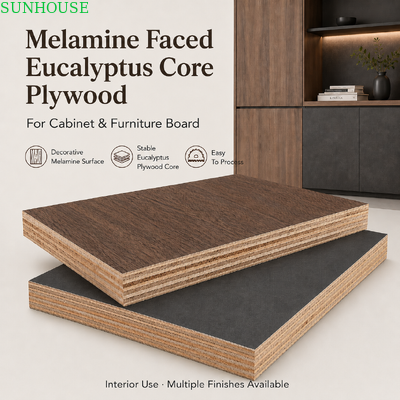
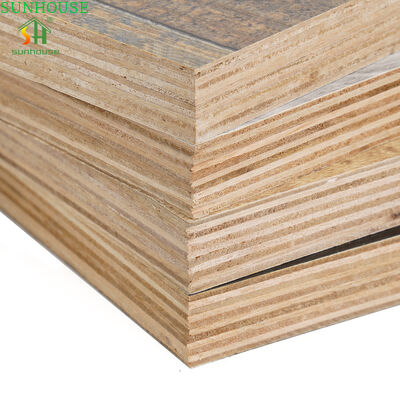
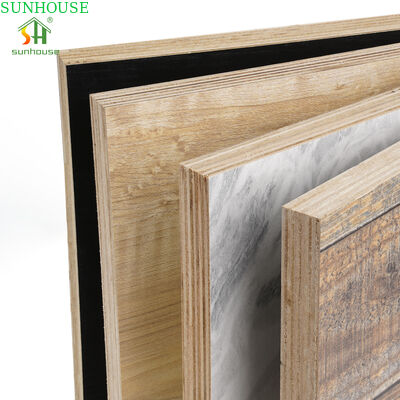
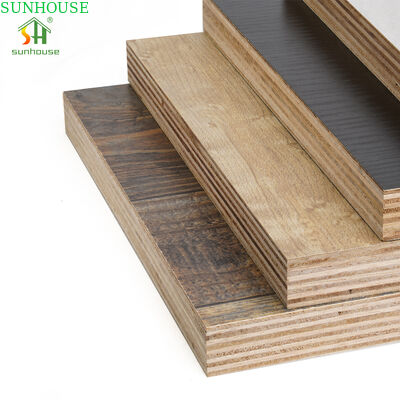
| Brand Name: | SUNHOUSE |
| Model Number: | ply-19 |
| MOQ: | 1000 |
| Payment Terms: | T/T |
Melamine faced plywood may look flat and well finished when it leaves the factory, but bonding problems can become visible later during storage, cutting, edge processing or furniture production.
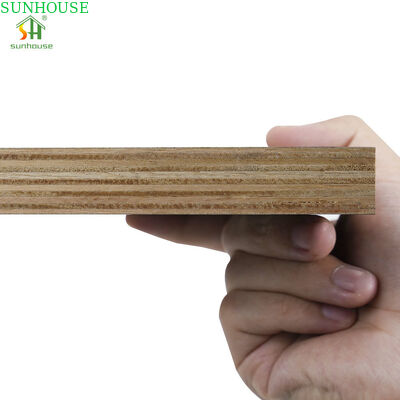
Bubbling, blistering and layer separation are not only appearance problems. They may indicate that part of the panel structure or decorative surface has not remained properly bonded.
One of the biggest risks for furniture factories is receiving panels that initially appear acceptable but later develop local bubbles, loose decorative surfaces or separated plywood layers.
At that stage, the cost is no longer limited to replacing the plywood. The buyer may already have spent money on cutting, CNC machining, edge banding, hardware installation and furniture assembly.
Bulk buyers should therefore evaluate bonding stability together with surface appearance, core quality and machining performance.
If the plywood base contains poorly bonded veneers or uneven areas, the decorative surface is being laminated onto an unstable foundation.
Excessive or uneven moisture inside veneers can affect dimensional stability and bonding during pressing and later storage.
Uneven adhesive application or inadequate bonding conditions can create local weak areas between plywood veneers.
Temperature, pressure and pressing time must be matched to the material and production process to achieve consistent bonding.
A substrate with localized high or low areas can reduce consistent contact during decorative surface pressing.
High humidity, direct moisture exposure or poor stacking may increase dimensional stress after production.
Bonding quality is not determined by one manufacturing step. It depends on the complete production process from plywood core preparation to decorative surface pressing.
| Problem | Where Separation Happens | What Buyers Should Check |
|---|---|---|
| Melamine Surface Separation | Between decorative surface and plywood substrate | Surface pressing, substrate flatness and lamination quality |
| Plywood Veneer Delamination | Between internal wood veneer layers | Core adhesive, veneer condition and plywood bonding quality |
| Local Surface Bubble | Small localized area underneath the melamine surface | Local contact, substrate condition and pressing consistency |
| Edge Separation | Visible from the cut edge of the plywood | Internal bonding and resistance to processing stress |
A surface lamination issue and an internal plywood bonding issue require different quality-control solutions.
| Processing Step | Stable Bonding | Potential Bonding Problem |
|---|---|---|
| Panel Cutting | Layers remain more stable along the cut edge | Local veneer or surface separation becomes visible |
| CNC Routing | Board structure remains consistent after material removal | Weak layers may loosen around machined areas |
| Drilling | Surrounding veneers remain bonded | Local separation may develop around holes |
| Edge Banding | Cut edge provides a more stable base | Loose veneer layers can affect edge finishing |
| Furniture Assembly | Components maintain more consistent structure | Separation may appear after additional fixing stress |
Surface inspection alone cannot fully confirm bonding quality. Buyers should combine visual inspection with actual processing samples.
After production, melamine plywood should be stored and transported in conditions appropriate for wood-based panels.
Avoid direct contact with water, wet floors and uncontrolled moisture exposure.
Proper support and stacking can help reduce unnecessary panel distortion.
Exposed plywood edges are generally more vulnerable to environmental moisture than the decorative melamine surface.
The decorative surface can provide practical resistance to everyday dirt and limited moisture exposure, but overall moisture performance also depends on the plywood substrate, bonding system, exposed edges and final application.
A small saving in panel price may become insignificant if bonding failures create rejected components during furniture production.
| Cost Stage | Potential Loss From Bonding Failure |
|---|---|
| Raw Board | Replacement of defective sheets |
| Cutting | Material and machine time already consumed |
| CNC Processing | Finished components may need to be remade |
| Edge Banding | Additional labor, glue and edge banding materials are lost |
| Assembly | Hardware and labor may already have been added |
| After Delivery | Customer claims and replacement costs become significantly higher |
Stable board construction is especially important when one order will be processed into large quantities of identical furniture components.
A high-quality decorative surface is important, but professional buyers should also confirm how well the plywood structure and melamine surface remain bonded after cutting and machining.
Before comparing bulk quotations, define the required plywood core, bonding performance, application environment and processing method. This helps suppliers quote a board that is suitable for the actual furniture production requirement rather than only matching size and color.
Send us your required thickness, core type, surface finish, application and processing method. Suitable melamine faced plywood specifications can be matched according to your cutting, CNC machining, edge banding and furniture production requirements.
Request Sample & Quotation

 english
 français
 Deutsch
 Italiano
 Русский
 Español
 português
 Nederlandse
 ελληνικά
 日本語
日本語
 한국
한국
 العربية
 हिन्दी
 Türkçe
 indonesia
 tiếng Việt
 ไทย
ไทย
 বাংলা
বাংলা
 فارسی
فارسی
 polski
