
5s
+1
Submission successful!

|
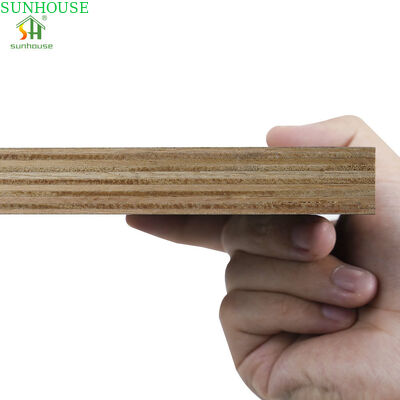
| Brand Name: | SUNHOUSE |
| Model Number: | ply-19 |
| MOQ: | 1000 |
| Payment Terms: | T/T |
Melamine laminated plywood is rarely used as a complete sheet. Cabinet and furniture factories normally cut, route, drill and edge band the board before it becomes a finished component.
This means processing performance is one of the most practical ways to evaluate whether a plywood panel is suitable for repetitive furniture manufacturing.
Buyers may receive melamine plywood with a flat and attractive surface, but the real manufacturing test begins when the sheet reaches a panel saw, CNC router or drilling machine.
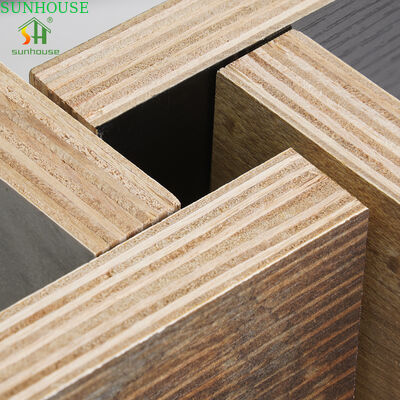
Chipped decorative edges, exposed core gaps, loose veneer sections or uneven cutting surfaces can increase rework and make subsequent edge banding more difficult.
The quality of the board should therefore be evaluated according to how consistently it performs after cutting and machining.
Small pieces of the decorative surface break away along the cutting line, creating an irregular visible edge.
Internal gaps become visible only after the plywood is cut into furniture-sized components.
Poorly supported or weak internal veneers can tear locally during cutting or routing.
CNC machining may expose inconsistent internal structure or leave areas requiring additional finishing.
Decorative layers or veneers can chip around drilled holes when panel construction or tooling is not properly matched.
An uneven cut edge can make it harder to achieve a clean, straight and visually consistent finished edge.
Machine settings and tool quality are important, but the plywood itself also influences the final result.
| Board Factor | Why It Matters During Processing |
|---|---|
| Melamine Surface Bonding | A well-bonded decorative layer is less likely to loosen locally when the panel is cut. |
| Core Veneer Quality | More consistent inner veneers provide better support behind the cut edge. |
| Core Voids | Large internal gaps may become exposed after cutting or CNC routing. |
| Panel Flatness | Flatter panels are easier to support consistently during machining. |
| Thickness Consistency | Stable thickness helps factories maintain repeatable machine settings. |
| Internal Bonding | Properly bonded veneer layers are less likely to separate under machining stress. |
| Inspection Point | Better Controlled Result | Potential Production Risk |
|---|---|---|
| Decorative Surface | Cleaner cutting line with limited visible edge damage | Excessive surface breakout or chipped corners |
| Plywood Core | More continuous and consistent exposed veneer structure | Large voids or loose internal sections |
| Edge Straightness | Suitable foundation for later finishing | Additional trimming or rework required |
| Furniture Components | More repeatable quality across multiple cut pieces | Higher sorting and rejection rate |
Straight cutting exposes only the edge of the panel, while CNC routing can remove material from grooves, channels, recesses and shaped components.
This makes CNC processing particularly useful for identifying internal core gaps, loose veneers or inconsistent areas that may not be visible on an unprocessed sheet.
For furniture factories producing routed doors, cabinet parts or customized components, actual CNC testing is more useful than visual inspection alone.
Cabinet manufacturing often requires repeated drilling for hinges, connectors, shelf supports and other hardware. The material around these fixing positions should remain sufficiently stable after machining.
| Drilling Area | Buyer Concern |
|---|---|
| Hinge Holes | Clean machining and sufficient material support around the fitting. |
| Connector Holes | Consistent internal structure where assembly hardware is installed. |
| Shelf Pin Holes | Repeatable drilling quality across multiple cabinet components. |
| Screw Positions | Avoid large internal voids in critical fixing areas. |
PVC and ABS edge banding performs best when the underlying panel edge is straight, stable and properly prepared.
Large core gaps, loose veneer fragments or severe cutting damage can create irregularities that remain visible even after the edge has been covered.
Even a well-manufactured melamine plywood panel can produce poor cuts when processed with worn blades, unsuitable cutters or incorrect machine settings.
Professional buyers should therefore avoid judging material quality from a machining test unless the equipment and cutting parameters are suitable for laminated wood-based panels.
Blade condition, tooth geometry, feed speed, cutter sharpness, machine stability and panel support can all influence the final result. Material and machine conditions should be checked together.
| Production Problem | Possible Buyer Cost |
|---|---|
| Chipped Panels | Components may need trimming, sorting or replacement. |
| Exposed Core Voids | Finished pieces may be rejected before edge banding. |
| Rough CNC Areas | Additional sanding or re-machining may be required. |
| Damaged Drilling Areas | Hardware installation may become more difficult. |
| Poor Edge Banding Base | More rework and inconsistent finished furniture edges. |
| High Rejection Rate | Material, machine time and labor are all lost. |
Melamine plywood should not be selected only by surface color, nominal thickness or full-sheet appearance.
For cabinet and furniture manufacturers, the more important question is whether the material can deliver repeatable cutting, routing, drilling and edge banding results during real production.
A representative machining sample before bulk ordering can help buyers compare plywood grades more accurately and reduce processing surprises later.
Send us your required plywood thickness, core type, melamine finish and processing method. Suitable panel specifications can be matched for panel saw cutting, CNC routing, drilling and edge banding production.
Request Machining Sample & Quotation

 english
 français
 Deutsch
 Italiano
 Русский
 Español
 português
 Nederlandse
 ελληνικά
 日本語
日本語
 한국
한국
 العربية
 हिन्दी
 Türkçe
 indonesia
 tiếng Việt
 ไทย
ไทย
 বাংলা
বাংলা
 فارسی
فارسی
 polski
