
5s
+1
Submission successful!

|
| Brand Name: | SUNHOUSE |
| Model Number: | ply-19 |
| MOQ: | 1000 |
| Payment Terms: | T/T |
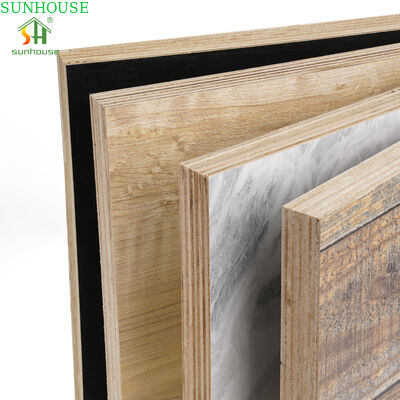
Decorative laminated plywood used for cabinets and wardrobes is rarely left with an exposed raw edge. After the panels are cut to size, visible edges are normally finished with PVC, ABS or other edging materials.
The final appearance therefore depends not only on the decorative face, but also on the quality and consistency of the plywood edge underneath.
After PVC or ABS edge banding is applied, customers normally cannot see the plywood core directly. However, defects underneath the edging can still affect the appearance and consistency of the finished furniture.
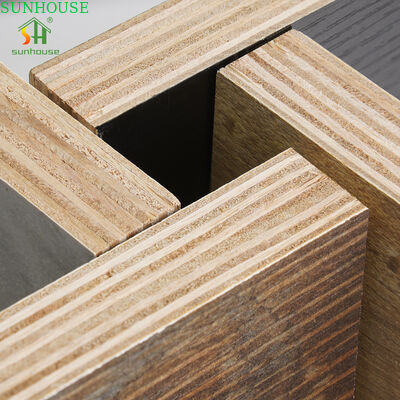
Large core gaps, loose veneer layers, uneven panel thickness or damaged cut edges can create local depressions, irregular glue lines or inconsistent edge profiles.
For cabinet and wardrobe production, a stable and continuous panel edge provides a better foundation for a clean finished appearance.
Large internal voids may leave unsupported areas underneath the edge banding and create an uneven profile.
Rough or irregular panel edges can make the finished glue line more visible along cabinet components.
Poorly bonded plywood veneers can create weak areas underneath the finished edge.
Decorative surface damage close to the cut edge may remain visible even after edging is applied.
Inconsistent panel thickness can make machine adjustment and repetitive edge finishing more difficult.
Internal veneer separation near the edge can affect the stability of finished cabinet components.
| Inspection Point | Better Controlled Panel | Potential Low-Grade Result |
|---|---|---|
| Core Structure | More continuous support along the edge | Large gaps become visible after cutting |
| Cut Edge | More even foundation before edge finishing | Rough or locally damaged edge |
| Edge Band Profile | More consistent appearance along cabinet parts | Local depressions or irregular areas |
| Glue Line | Easier to achieve a clean finished joint | Uneven or more visible bonding line |
| Finished Component | More uniform appearance across repetitive furniture parts | More sorting and rework during assembly |
PVC edging is widely used for cabinet carcasses, wardrobes, shelving and general furniture panels. It is available in many colors, thicknesses and decorative designs to coordinate with the laminated plywood surface.
ABS edging is another option used in furniture manufacturing when project specifications or market requirements call for this type of edge material.
A good decorative match is important, but the substrate edge underneath must also be suitable for the intended furniture finish.
| Furniture Component | Why Edge Quality Matters |
|---|---|
| Kitchen Cabinet Side Panels | Front-facing edges remain visible after cabinet installation. |
| Cabinet Shelves | Shelf front edges need a clean decorative finish. |
| Wardrobe Panels | Large visible components require consistent finished edges. |
| Drawer Components | Repetitive parts require consistent thickness and edge appearance. |
| Office Furniture | Visible desks, shelves and storage panels often require decorative edging. |
| Retail Fixtures | Exposed furniture edges are part of the final visual finish. |
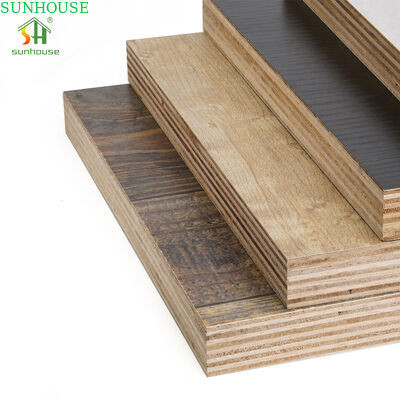
One reason buyers inspect the cut edge of cabinet grade plywood is to understand how much continuous material is available underneath the decorative edging.
If a large void occurs exactly along a visible furniture edge, there may be less support underneath the PVC or ABS banding. This can influence the final profile even though the internal defect itself is no longer directly visible.
Buyers should not expect PVC or ABS edging to compensate for major internal plywood defects.
Furniture factories may process hundreds of identical side panels, shelves or cabinet components in one production run. Consistent finished plywood thickness makes repetitive setup and assembly easier to control.
| Thickness Issue | Possible Effect |
|---|---|
| Stable Thickness | Supports consistent furniture component dimensions. |
| Large Variation | May require additional machine adjustment or sorting. |
| Uneven Edge | Can affect the visual alignment of finished edging. |
| Assembly Difference | Variations may become visible when multiple components meet. |
Cabinet manufacturers normally coordinate the edging color with the decorative surface of the panel. This becomes particularly important for wood grain, off-white, grey and other design-sensitive furniture finishes.
Panel quality is important, but edge banding performance also depends on the edging material, adhesive, machine setup and production conditions.
| Factor | What It Influences |
|---|---|
| Panel Edge Preparation | Provides the base surface for edge bonding. |
| PVC or ABS Quality | Influences appearance, flexibility and furniture finish. |
| Adhesive System | EVA, PUR or other systems should match production requirements. |
| Machine Settings | Temperature, feed conditions and pressure affect the finished result. |
| Trimming & Finishing | Final trimming determines the visible edge profile. |
The panel, edging material, adhesive and machine settings should be evaluated together when diagnosing edge failures.
| Problem | Possible Buyer Cost |
|---|---|
| Large Core Void | Cut furniture component may need to be rejected. |
| Uneven Edge | Additional trimming or preparation may be required. |
| Visible Glue Line | Finished cabinet appearance may not meet the required level. |
| Color Mismatch | Edging may need to be replaced or furniture components remade. |
| Edge Delamination | Rework cost rises after furniture assembly. |
For kitchen cabinets, wardrobes and interior furniture, the visible quality of a laminated plywood panel continues beyond the front and back surfaces.
Core consistency, cut-edge quality, finished thickness and the selected PVC or ABS edge banding system all contribute to the final cabinet appearance.
Before placing a bulk order, buyers should inspect both raw panel edges and actual edge-banded samples using the intended furniture specification.
Send us your required panel size, thickness, plywood core, decorative finish, cabinet application and edge banding requirements. Suitable laminated plywood and furniture panel specifications can be matched for kitchen cabinets, wardrobes, shelving and interior joinery.
Request Panel Samples & Quotation

 english
 français
 Deutsch
 Italiano
 Русский
 Español
 português
 Nederlandse
 ελληνικά
 日本語
日本語
 한국
한국
 العربية
 हिन्दी
 Türkçe
 indonesia
 tiếng Việt
 ไทย
ไทย
 বাংলা
বাংলা
 فارسی
فارسی
 polski
