
5s
+1
Submission successful!

|
| Brand Name: | SUNHOUSE |
| Model Number: | ply-19 |
| MOQ: | 1000 |
| Payment Terms: | T/T |
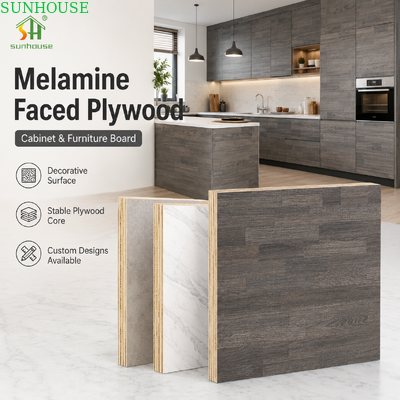
Melamine laminated plywood is widely used for kitchen cabinets, wardrobes, storage furniture and other interior joinery. However, buyers should not judge moisture performance only by the decorative melamine surface.
The plywood substrate, adhesive system, exposed edges, edge sealing and actual installation environment all influence how the finished furniture performs around humidity and occasional moisture.
Kitchen cabinets and vanity furniture can be exposed to humidity, condensation, cleaning moisture and occasional water splashes. This makes material selection more demanding than for a wardrobe installed in a dry bedroom.
Buyers therefore need to understand where the moisture comes from, which part of the panel is exposed and what level of performance the plywood specification actually provides.
A wall cabinet, sink cabinet and bathroom vanity may all require different attention to substrate, edges and installation details.
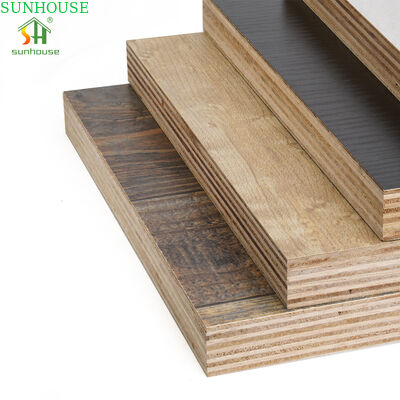
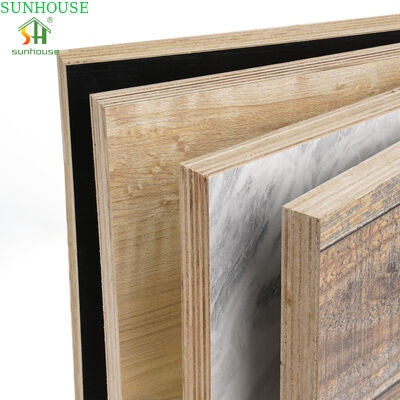
The decorative faces are covered, but cut plywood edges can remain more vulnerable if they are not properly finished or sealed.
Hardware holes and service openings can expose the plywood structure when located in areas subject to moisture.
Plumbing leaks, condensation and cleaning water can create more demanding conditions inside lower kitchen cabinets.
Furniture installed directly against a damp floor may experience moisture exposure from the bottom edge.
Repeated high humidity can create a different service environment from normal bedroom or office furniture.
Scratches, broken corners or damaged edging can create additional moisture entry points during service.
| Panel Part | Main Function | Buyer Should Understand |
|---|---|---|
| Melamine Decorative Face | Provides decorative appearance and an easy-clean finished surface. | It can help protect the face but does not define the complete moisture rating of the plywood. |
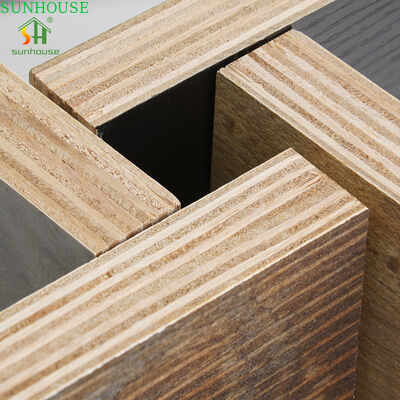
| Plywood Core | Provides the structural wood-based panel underneath the decorative finish. | Core quality, veneer condition and panel construction affect dimensional stability. |
| Internal Bonding | Bonds the plywood veneer layers together. | The adhesive specification should match the intended environment and required performance. |
| Edge Banding | Covers and finishes exposed furniture edges. | Good edge finishing can help reduce direct exposure of the plywood edge. |
If the project requires a specific moisture or water-resistance level, buyers should confirm the plywood substrate and bonding specification instead of relying only on the decorative surface.
| Specification Factor | Why It Matters |
|---|---|
| Plywood Bonding System | Different adhesive specifications are intended for different service conditions. |
| Core Veneer Quality | More consistent veneer construction helps support stable panel performance. |
| Moisture Content | Proper moisture control during manufacturing helps reduce dimensional instability. |
| Panel Flatness | Unstable or distorted panels may create difficulties during cabinet production and installation. |
| Edge Protection | Exposed plywood edges are generally more sensitive than laminated faces. |
| Installation Environment | Continuous damp exposure requires a different specification from occasional interior humidity. |
Using the same decorative finish throughout a kitchen does not mean every cabinet location has the same exposure condition.
| Cabinet Location | Typical Risk | Buyer Focus |
|---|---|---|
| Upper Cabinets | Cooking humidity and normal interior moisture | Stable board construction and surface quality |
| Base Cabinets | Cleaning water and floor-level moisture | Bottom edge protection and suitable panel specification |
| Sink Cabinet | Leakage and plumbing moisture | Higher attention to substrate, edges and installation protection |
| Dishwasher Area | Heat, steam and occasional moisture | Correct installation clearance and material selection |
Once decorative plywood is cut into cabinet components, the original panel edge becomes exposed. PVC or ABS edge banding is commonly used to finish these edges.
For kitchen and vanity furniture, buyers should pay particular attention to areas near sinks, floors, plumbing penetrations and other possible moisture sources.
| Marketing Claim | Why It Can Be Misleading | Better Buyer Question |
|---|---|---|
| Waterproof Surface | Describes only part of the finished panel. | What plywood substrate and bonding system are used? |
| Suitable for Kitchen | Kitchen locations can have very different exposure conditions. | Is it intended for wall cabinets, base cabinets or sink areas? |
| Moisture Resistant | The term alone does not explain the actual test or performance level. | What requirement or test result supports the claim? |
| Application | Selection Priority |
|---|---|
| Wardrobes | Surface appearance, flatness, furniture performance and normal indoor use. |
| Kitchen Cabinets | Board stability, cleanability, edge treatment and humidity exposure. |
| Bathroom Vanities | Higher attention to moisture conditions, exposed edges and installation detailing. |
| Commercial Interior Furniture | Match substrate and surface specification to cleaning and service conditions. |
Decorative melamine plywood can be a practical furniture panel for cabinets, wardrobes and interior joinery, but buyers should distinguish between normal interior humidity and applications where repeated water exposure may occur.
The finished performance depends on the complete system: decorative surface, plywood substrate, bonding, edge treatment, furniture design and installation environment.
Before placing a bulk order, clearly define where the panel will be used so the supplier can match the appropriate plywood specification instead of quoting only by thickness and surface color.
Send us your panel size, thickness, plywood core, decorative finish, furniture application and expected service environment. Suitable panel specifications can be matched for kitchen cabinets, vanities, wardrobes and interior furniture production.
Request Panel Specification & Quotation

 english
 français
 Deutsch
 Italiano
 Русский
 Español
 português
 Nederlandse
 ελληνικά
 日本語
日本語
 한국
한국
 العربية
 हिन्दी
 Türkçe
 indonesia
 tiếng Việt
 ไทย
ไทย
 বাংলা
বাংলা
 فارسی
فارسی
 polski
