


 english
 français
 Deutsch
 Italiano
 Русский
 Español
 português
 Nederlandse
 ελληνικά
 日本語
 한국
 العربية
 हिन्दी
 Türkçe
 indonesia
 tiếng Việt
 ไทย
 বাংলা
 فارسی
 polski

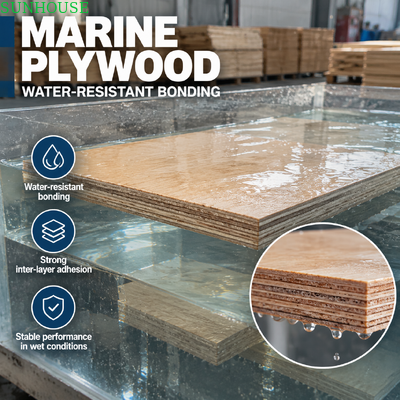
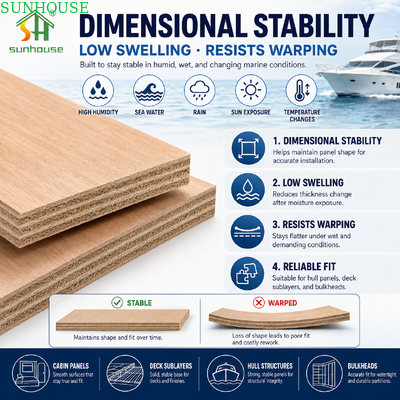
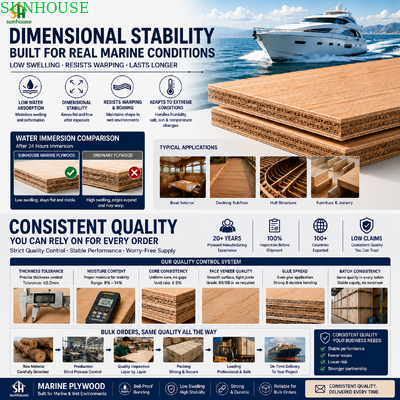
Choose by service conditions
Exterior plywood is intended for applications where the panel may experience repeated wetting and drying or long-term exposure to weather, provided it is correctly specified, finished, installed and maintained. The exposure classification is a key part of product selection.
APA explains that Exterior panels are designed for long-term weather exposure, while Exposure 1 panels are intended for uses where long-term weather exposure is not expected, such as moisture exposure during construction delays. These classifications describe bond durability and should not be treated as interchangeable product labels.
Exterior vs Exposure 1
| Comparison point | Exterior | Exposure 1 |
|---|---|---|
| Intended exposure | Repeated wetting/drying or long-term weather exposure | Temporary construction moisture or similar limited exposure |
| Long-term outdoor use | Designed for this exposure when properly finished and maintained | Not intended for long-term weather exposure |
| Typical decision | Specify for permanent exterior applications where permitted by design | Specify where the panel will be protected after temporary exposure |
| Other performance factors | Still depends on grade, veneer, structural rating and detailing | Same: moisture classification alone does not establish structural capacity |
APA notes that Exposure 1 panels may use exterior-type adhesives, but other panel composition factors can limit long-term weather performance. A moisture-resistant glue line alone does not make the whole panel suitable for permanent outdoor exposure.
Weather protection still matters
Even when an exterior-rated panel is selected, the assembly should manage water. Avoid water traps, provide drainage and ventilation, protect cut edges, use compatible coatings and seal penetrations. The USDA Forest Service explains that wood changes dimension as moisture conditions change; moisture control during storage, transport and service helps reduce dimensional problems.
Exterior plywood specification checklist
| Specification | What to state | Verification |
|---|---|---|
| Exposure class | Exterior / Exposure 1 / applicable local class | Panel stamp and product documentation |
| Structural rating | Required design capacity or span rating | Applicable standard and engineering data |
| Panel thickness | Project-specific nominal thickness | Caliper measurement / tolerance record |
| Veneer grade | Face and back grade | Visual grading rules |
| Surface treatment | Paint, coating, overlay or untreated | Coating specification |
| Edge treatment | Sealed / unsealed / machined profile | Inspection and installation details |
Typical exterior use cases
Frequently asked questions
Can Exposure 1 plywood be used outside?
Does Exterior mean rot-proof?
Can I use the same thickness for every outdoor project?
Technical references
These public sources support the general technical explanations on this page. They do not certify the specific product offered by any supplier. Product-specific claims must be supported by the relevant factory records, test reports and destination-market documents.
- APA – Plywood and bond classifications
- APA – Moisture Exposure Recommendations for Wood Structural Panels
- USDA Forest Service – Moisture content and dimensional changes
Before publishing, insert verified product parameters, company identity, named technical reviewer, current factory photos and applicable test/certification documents. Remove any claim that cannot be substantiated for the exact product and batch.
Need a plywood specification matched to your project?
Share the required thickness, panel size, core construction, exposure condition and destination market for a product-specific quotation.
