
5s
+1
Submission successful!

|
| Brand Name: | SUNHOUSE |
| Model Number: | Customized |
| Payment Terms: | L/C,T/T |
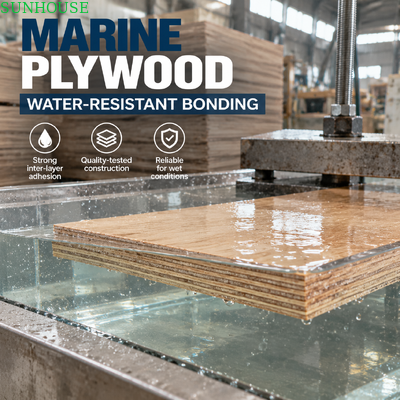
Plywood performance depends on the quality of the bond joining adjacent veneer layers. A durable glue line helps the panel retain its integrity under the moisture conditions for which it was designed.
The adhesive system must work together with veneer preparation, adhesive spread, assembly time, pressing conditions and manufacturing quality control. These factors contribute to the bonding performance of the finished plywood panel.
WBP is a familiar trade abbreviation in the plywood industry, but it does not replace a complete product specification. Buyers should identify the applicable bond classification, standard edition and test report for the offered panel.
An adhesive declaration identifies the material used during production. The finished plywood panel still requires appropriate testing to demonstrate its bonding quality under defined conditions.
A professional plywood specification should explain the adhesive system and manufacturing controls without relying on unsupported performance claims.
State only the resin type confirmed by the manufacturer, such as phenolic or melamine-based systems where applicable.
Adhesive spread, open assembly time, hot-press conditions and curing control.
Test method, conditioning, shear result and wood-failure assessment where required.
Batch number, production date and connection between the tested sample and delivered goods.
Adhesive selection alone cannot guarantee the finished panel's bonding quality. Consistent production conditions and appropriate quality checks are equally important.
Different testing standards address different technical requirements. Buyers should select the method that matches the product specification and intended end use.
ISO 12466-2 specifies requirements for determining the bonding quality class of plywood and related laminated veneer products bonded with thermosetting resins.
EN 314-2 establishes bonding quality requirements for plywood according to intended end use. ASTM D906 provides a method for measuring comparative adhesive shear strength in plywood-type construction under specified test conditions.
| Reference | Technical Purpose | How Buyers Use It |
|---|---|---|
| EN 314-2 | Bonding quality requirements for plywood end uses. | Specify the applicable bond class and edition. |
| ISO 12466-2 | Requirements for plywood bonding quality classes. | Use where the project or market specifies ISO. |
| ASTM D906 | Comparative adhesive shear-strength testing in plywood-type construction. | Use as a test method within an agreed test plan. |
These standards address different technical requirements. Passing one test does not automatically establish compliance with every other standard or every service condition.
The following information helps importers, distributors and manufacturers establish a clear technical specification for WBP glue plywood.
| Data Field | Required Information |
|---|---|
| Product / Batch Code | Manufacturer's traceable identification. |
| Panel Construction | Thickness, panel size, ply count and core species. |
| Adhesive Declaration | Manufacturer-confirmed adhesive system. |
| Bond Classification | Applicable standard, edition and class. |
| Test Procedure | Testing standard, conditioning and sample preparation. |
| Test Result | Measured values and acceptance criteria. |
| Laboratory Information | Laboratory name, report number and testing date. |
Clear bonding documentation helps importers compare equivalent plywood products, understand differences in WBP descriptions and select panels suitable for their intended working environment.
For manufacturers, documented quality checks help connect production controls with customer requirements and provide a basis for reviewing product consistency.
Confirm the panel construction and adhesive system.
Select the applicable bonding standard and class.
Review the laboratory report and acceptance criteria.
Connect the test record with the supplied production batch.
When a project has demanding performance requirements, request a test report for the actual offered panel construction and agree on sample selection before production begins.
Not necessarily. WBP is a common trade abbreviation describing water-resistant bonding performance. Adhesive systems may vary by manufacturer and product specification. Phenolic resin is one adhesive option, but buyers should request the manufacturer's actual adhesive declaration and relevant bonding test report.
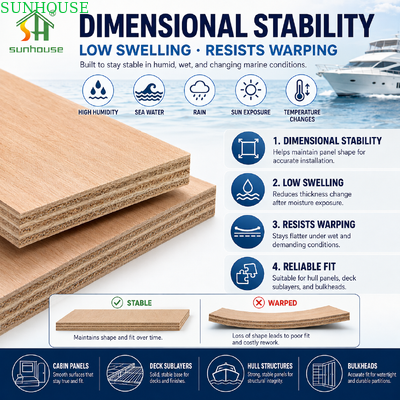
No. Plywood is made from natural wood veneers, which can absorb moisture and change dimensions as environmental conditions change. Durable bonding helps maintain the connection between veneer layers, but it does not eliminate wood swelling, shrinkage or moisture absorption. Proper storage, edge sealing and installation remain important.
No. ASTM D906 is a test method for evaluating comparative adhesive shear strength in plywood-type construction. It does not independently certify a plywood product as waterproof or establish compliance with all bonding classifications.
Adhesive type identifies the resin or bonding material used during manufacturing. Bonding quality describes the performance of the finished glue line when evaluated using an applicable testing procedure. A particular resin name alone does not establish the performance of the finished plywood.
Batch information helps buyers connect laboratory test results with the production goods being supplied. It improves traceability and helps distinguish general product test data from results associated with a specific production batch.
The following recognised technical resources provide additional information about plywood bonding quality, adhesive testing and wood properties.
These references explain general technical requirements and testing principles. Actual product compliance should be established through documentation and laboratory results applicable to the supplied panel.
SUNHOUSE provides plywood product options for furniture, construction and industrial applications. Contact our team to discuss adhesive systems, core materials, panel specifications, bonding requirements and international export packaging.


 english
 français
 Deutsch
 Italiano
 Русский
 Español
 português
 Nederlandse
 ελληνικά
 日本語
 한국
 العربية
 हिन्दी
 Türkçe
 indonesia
 tiếng Việt
 ไทย
 বাংলা
 فارسی
 polski
